Tuesday, March 24, 2020

THE PERFECT LIFE

The perfect life is when Yehovah is our counsellor and guide. Proverbs 3:6: In all your ways acknowledge him, and He will direct your paths. If is not that we seek Yehovah in a great emergency; but that we habitually wait on Him in every detail of life, great and small. When we acknowledge Him we will find that He will guide us and then we can come before Him thanking for His intervention and help.

The perfect life has only one object and that is Yehovah. Jesus walked on this earth with that singleness of eye. He set Yehovah before him as his only object. In such a life there is nothing of self or of self-will, self is dead.

Setting Yehovah before him he found that Yehovah was at hand, ever to support him, so that nothing could move him from the path that leads to life.

Believers can follow the same path of life, relying on Yehovah to guide them along the way. IF, day by day we set Yehovah before us as our one object; to serve Him, to please Him, to do His will, shall we not find He will be with us to support us along the way. With His support we will not be turned be moved or turned aside by any trial, circumstance, opposition, persecution or suffering we may meet along the narrow path that leads to life.

The perfect life has joy and gladness of heart that people of the world do not experience. Notice what Jesus says: "These things I have spoken to you that my joy may remain in you." (John 15:11) David says of Yehovah; "You have put gladness in my heart". (Psalm 4:4)

Our lives are lived in the light of the glory of to which it leads, be with the lord Jesus co-ruling with him during his thousand year rule, after he has been sent down by his Father to take his place on the throne of David at Zion at the end of this age. "The path of life" leads to the presence of Yehovah where there is fullness of joy for ever more!".

Let us consider the lord Jesus as he walked on the path of life on this earth during his life. May Yehovah help us to realize that we can walk on that path, in the same way that the lord Jesus did. We will be enabled to do so because we have a great High Priest to sustain us, as we follow in his steps, along the path of life he has marked out for us. Whatever we may have to endure along the way, let us remember the words, "Be strong in the grace that is in God's anointed one Jesus". (2 Timothy 2:11)

Jesus walked on the path of life leaving us a way to follow in his steps. He walked on that path depending on the love of His Father, totally committed to doing His will, relying on His enabling power to carry him through. Jesus walked before his God and his Father as a humble man, with a contrite heart always acting as a servant towards all that he met. We can do no less! May our God and Father enable us to do so, Amen.   

DO WE HAVE CONFIDENCE IN THE LOVE OF YEHOVAH AND DEPENDANCE ON HIS POWER?

Psalm 16:1-11: Preserve me, O God; For in You do I take refuge. [O my soul], you have said unto Yehovah, You are my Lord: I have no good beyond You [If what we do is outside of serving Yehovah it is worthless]. As for the saints - holy ones that are in the earth, they are the excellent in whom is all my delight.

Sorrows shall be multiplied to those that give gifts for another  god [idolatry]:
Their drink-offerings of blood will I not offer, Nor take their names [of their gods upon my lips.

Yehovah is the portion of my inheritance and of my cup: He maintains my lot. The lines are fallen unto me in pleasant places; Yea, I have a good heritage. I will bless Yehovah, Who has given me counsel; yes, my heart instructs me in the night seasons. I have set Yehovah always before me: Because He is at my right hand, I shall not be moved. Therefore my heart is glad, and my glory rejoice; my flesh also shall dwell in safety. For You will not leave my soul in the grave; neither will You suffer Your holy one to see corruption. You will show me the path of life: In Your presence is fullness of joy; In Your right hand there are pleasures for evermore.

Notice: Psalm 16 sets forth the moral perfections of God's anointed one Jesus, the only perfect man, as he walked the path of life through this world of sin and death. How we ought to more often contemplate the path he walked and realize in doing so; he did it because he loved us, willing to go through a life of suffering and in the end to give up his life for us, in order that we might have new age life.

We learn what Yehovah is as we look into the character of the lord Jesus and we learn what man is in perfection when we look at Jesus.

When we occupy ourselves in the lord Jesus, feeding on the Bread of God, a transforming power takes place within us. When we trace his path through this world it draws out our love for himself.

Jesus perfect life was a life of confidence and dependance. Confidence in the love of Yehovah and dependance on the enabling power of Yehovah. 

Jesus did not depend on man or angels to enable him to walk through all the dangers and opposition he knew he would meet. He did not even depend on himself; but was fully dependant on his God and Father. He was entirely dependant on God's power because he had entire confidence in God's heart of love. He knew God loved him. With absolute confidence in God's love he looked to his God and Father to preserve him and enable him to hold fast to the end.

He wasn't ignorant as to how much his enemies hated him: "They that hate me without cause are more than the hairs of my head: they that would destroy me, being my enemies, wrongfully, are mighty. (Psalm 69:4)

That did not detract him from believing and trusting in Yehovah: "As for me, I will call upon God; and Yehovah will save me. Evening and morning and at noon, I will pray and cry aloud; and He will hear my voice." (Psalm 55:16,17) 

There were times when he was brought very low in his circumstances and he would say: "Preserve me, O God: for in You do I put my trust". 

Following in the footstep of his lord Paul could say while in prison: "Yehovah will deliver me from every evil work and preserve me unto His heavenly Kingdom." (2 Timothy 4:18)

Are we believers lowly and of little account in this world? Then let us remember that Yehovah delights to be associated with such people. (James 2:5)

Do we have the confidence in the love of the Father and of the lord Jesus, that in the presence of enemies, dangers, desertions, trials and tribulation; we can say: "Preserve me Yehovah, in You do I put my trust"?

Remember: "It is not in man who walks to direct his steps" (Jeremiah 10:23). Indeed, we know that to be true. It is only as we depend on God's love and trust in Him to lead us along the way we should go that we will be able to walk in the spirit dong His will.

My Yehovah grant to all of us; and all our brothers and sister more of a spirit of discernment to know His will in these last days!

Tuesday, March 17, 2020

THE FAITH OF JESUS

For the apostle Paul and the other New Testament (NT) writers, the Christian faith is synonymous with the faith of Jesus.

Jesus’ gospel, or "good news of the kingdom of God" (Luke 4:43), is the message that the historical Jesus believed. The NT Jesus embodied his faith as both messenger and message, persuading his disciples to believe what he believed about the kingdom of God and about himself as its anointed ruler ("Christ" being a transliteration into English of the Greek, Christos, meaning "Anointed One," that is, the one whom God anoints to rule God’s kingdom; its Hebrew equivalent is Messiah). Jesus’ faith in "the word"; in his having come, according to the Law and the Prophets, to fulfill God’s promise to bless all nations in Abraham’s messianic seed; led him to his death on the cross, from which God raised Jesus, whose death and resurrection completed the message that Paul identified with "the faith of Jesus."

Faith in or Faith of?

Several Pauline texts refer to the faith of Jesus but are typically, and unfortunately, rendered by English NT versions as "faith in" Jesus (Romans 3:22, 26; Galatians 2:16 [twice] and 20; 3:22; Philippians 3:9). The rendering "faith in" points to the faith of Christians as the instrument God uses to justify them. But the rendering "faith of" points to the faith of the Messiah, that is, what the historical Jesus believed about himself and the kingdom of God, and what his faith led him to do, as God’s instrument of justification. So, what Jesus believed and what his faith led him to do: to proclaim the gospel of the kingdom of God and, as a result of its rejection, to die on the cross and be resurrected by his God; became both the instrument God uses to justify believers and the content of the NT revelation ("the word"). As such, the faith of Jesus is the object of NT Christian faith.

That the rendering "faith of" is preferable to "faith in" in these key Pauline texts (i.e., Romans 3:22, 26; Galatians 2:16, 20; 3:22; Philippians 3:9) can be confirmed by comparing them with Paul’s reference to "the faith of Abraham" (Romans 4:16), in which precisely the same original-language construction is used: for example, pisteos Jesou (Romans 3:26) and pisteos Abraau (Romans 4:16). (Any NT interlinear translation can be used to make these comparisons.) The point of Paul’s paralleling the faiths of Jesus and Abraham is to identify Jesus as the true heir of the Abrahamic faith and, therefore, as the true recipient of God’s Abrahamic promise to bless all nations in Abraham’s "seed" (Galatians 3:16; see also Genesis 12:1-3; 15:1-6; 18:18).

The rendering of Paul’s references to Jesus’ faith as "faith in" rather than "faith of" obscures Paul’s parallel between Jesus and Abraham. Abraham "did not waver in unbelief regarding the promise of God, but he grew strong in his faith as he gave glory to God, being fully persuaded that God was able to do what he had promised" (Romans 4:20-21). Just so, Jesus’ faith; his persuasion regarding God’s promise; that God would raise his Anointed One from the dead and exalt him to God’s right hand in God’s coming kingdom; according to Paul, "to confirm the promises given to the patriarchs, and in order that the Gentiles [the nations] might glorify God for his mercy" (Romans 15:8-9); led Jesus to his death on the cross and, therefore, to his resurrection. This is Paul’s "gospel," which God "promised beforehand through his prophets in the holy Scriptures . . ." (Romans 1:2), just as "the Scripture, foreseeing that God would justify the Gentiles [Greek,ethnos: the nations] by faith, preached the gospel beforehand to Abraham, saying, ‘In you shall all the nations be blessed’" (Galatians 3:8).

According to Paul, then, "the righteousness of God" (and, therefore, the hope of salvation) comes to Christians "through the faith of Jesus the Messiah [dia pisteos Jesou Christou] to all who believe" (Romans 3:22). And so, Paul's words clarify that Jesus' faith is the instrument God uses, whenever the NT gospel is heard, to impart God's righteousness to believing hearts.

This means that Christians; that is, believers in the NT gospel; are saved not because of their own faith but because of the faith of Jesus, as it is revealed in the NT gospel: ". . . we believed in the Messiah Jesus in order that we might be justified by the faith of the Messiah [ek pisteos Christou] and not by works of law [ek ergon nomou], because by works of law no flesh will be justified" (Galatians 2:16).

Two Approaches to Righteousness

Paul’s contrast is between two approaches to justification: "faith," on one hand, and "works," on the other. His contrast, however, is not between Christians whose "faith" involves trusting God for their righteousness, on one hand, and Christians, or Jews, who try to earn their righteousness through "works," on the other. Paul’s contrast is, instead, between "the faith of the Messiah" as God’s instrument of justification, on one hand, and "works of law" as the false instrument of justification into which the Mosaic law had been turned by first-century Pharisaic Judaism, on the other.

The error of Pharisaic Judaism was to misconstrue the Mosaic law as a  foundational and, therefore, permanent, element in God’s purpose for Israel and the nations. This error led to the first-century Jewish belief that God would fulfill his Abrahamic promise to bless all nations through the imposition of the Mosaic law on the nations by a restored Davidic dynasty, whose Messiah would lead the Jewish nation in conquest over the Romans and then the rest of the world. This could only occur, it was believed, when the Jewish nation was sufficiently observant of the Mosaic law. Thus, the first-century "tradition of the elders" (Matthew 15:2) was designed to enforce a kind of observance of the "letter" of the law that, in its earnest attempt at self-justification, repressed the "spirit" of the law (which had always been faith in God’s Abrahamic promise). God’s purpose, then (so it was believed), was to use the Mosaic law to fulfill his Abrahamic promise, the fulfillment, therefore, being the just reward for his people’s "works of law." The Jewish nation’s observance, therefore, of the religious tradition into which the Mosaic law had been turned by Pharisaic Judaism; Paul’s phrase for this observance being "works of law"; was believed to be God’s instrument for justifying his people.

Paul's correction of this error consisted in pointing out that the Mosaic law, rather than being foundational and permanent element in God's purpose, was instead structural and temporary.

The Mosaic law was structural in that it was built on the foundation of God’s Abrahamic promise, which preceded the giving of the law by "430 years" (Galatians 3:17). For what purpose? "It was added"; being a structural addition to the foundation of the Abrahamic promise; "because of transgressions" (Galatians 3:19a). The Mosaic law was given; in fulfillment of God’s promise to make of Abraham a great nation; to impart to Israel, through the nation’s "transgressions" of the ten commandments, an understanding of its alienation from its God: "For by works of law shall no flesh be justified before him, since through the law comes knowledge of sin" (Romans 3:20; see also Romans 7:7-25). The "knowledge of sin" came to faithful Israelites in light of the nation’s habitual failure to obey the first commandment: "You shall have no other gods before me" (Exodus 20:3; Deuteronomy 5:7), its idolatry resulting in its inability to faithfully obey the other commandments.

And the Mosaic law was temporary in that it "was added . . . until the seed should come to whom the promise had been made" (Galatians 3:19b), namely, Jesus.

From Old Covenant to New Covenant

According to Paul, then, the Mosaic law lasted from Moses to Messiah, the true Abrahamic "seed," in and through whom all of Abraham’s descendents, both Jews and Gentiles, would enjoy the promised blessing to all nations.

God fulfilled his Abrahamic promise according to his own timetable—"when the fullness of time had come" (Galatians 4:4); by sending his Anointed One to display a perfect faith in God’s Abrahamic promise. In so doing, God transformed the old covenant between God and one nation (Israel) into a new covenant between God and all nations (both Jews and Gentiles). The transition between the old and new covenants was the transition not only from a national to an international covenant between God and humanity but also from a legal to a spiritual covenant.

The Mosaic law was "the letter" (Romans 7:6; 2 Cor. 3:6), which could only condemn God’s people because it formed, by definition as a legal system, a record of their transgressions. As the writer of Hebrews says, "under law . . . without the shedding of blood there is no forgiveness" (Hebrews 9:22), because no legal system can forgive (in that forgiveness, by definition, is freely extended: the cancellation of an unpaid debt). God’s forgiveness could only be ceremonially, and therefore imperfectly, experienced under law, and this required that the ongoing and unending condemnation of the law be mitigated by "the shedding of blood." The animal sacrifices of the Mosaic law served the purpose of conveying to Israel a limited, ceremonial awareness of God’s forgiveness while the nation was acquiring "the knowledge of sin" through its transgressions of the ten commandments.

The function of the ongoing sacrifices required by the Mosaic law was not to "perfect those who draw near" (Hebrews 10:1) with an assurance of God’s forgiveness but, instead, to serve as "a reminder of sin every year" (Hebrews 10:3). While it is the nature of love (and, therefore, of God) to freely forgive, God’s people could not experience the assurance of God’s forgiveness until the Mosaic law, as the instrument through which God governed his old-covenant people, came to an end. (Though the Mosaic law no longer governs God’s people, it continues, along with "the Prophets," to "bear witness to" God’s righteousness [Romans 3:21] by telling the story of God’s faithfulness to his Abrahamic promise.)

Jesus’ faith in God’s promise led him to the cross, which brought the old covenant of "the letter" to an end (see Galatians 3:13-14; Ephessians 2:14-16; Colossians 2:13-14). What the blood of animals could do only imperfectly and temporarily; offer to believing hearts the experience of God’s forgiveness; the blood of Jesus has done both perfectly and permanently. And having brought to an end the rule of "the letter" at the cross, God raised Jesus from the dead, entering into a new covenant of "the spirit" with all of all nations who believe the NT gospel and, thereby, identify themselves with the faith of Jesus.

Jesus’ faith in "the word" of promise instilled on his mind and in his heart the love of his God, making him the embodiment of the new covenant: "For this is the covenant that I will make with the house of Israel after those days, declares the Lord: I will put my laws into their minds, and write them on their hearts, and I will be their God, and they shall be my people" (Hebrews 8:10; Jeremiah 31:33). The new-covenant law of God would no longer be "letter" but now "spirit," no longer a matter of the coercive power of a legal system but now the persuasive power of a spiritual (i.e., God-breathed) message: the NT gospel of Jesus and the kingdom of God. Through the faith of Jesus, then, God’s Spirit (Greek, pneuma, literally, breath, the metaphorical extension of God’s presence and power from heaven to earth in the literal form of the faith of Jesus) would write God’s law of love on believing hearts, empowering God’s people to love God and to love others as God has loved one and all, according to the NT faith of Jesus.

Another Jesus?

Perhaps the major problem with the rendering "faith in" rather than "faith of" is that it suggests that the Christian’s faith in Jesus was Paul’s central concern rather than what Jesus himself believed and, therefore, called his disciples to believe about the kingdom of God, that is, about God’s original and international purpose, and about Jesus as the one whom God anointed to fulfill his purpose and promise. For Paul, the critical question was whether the faith of the Christians to whom he wrote continued to correspond to the faith of the "Christ" Paul had proclaimed to them.

Paul warned his readers about "someone [who] proclaims another Jesus than the one we proclaimed," which would lead them to "receive a different spirit from the one you received [and] accept a different gospel from the one you accepted" (2 Corinthians 11:4). For Paul, "Jesus" and "spirit" and "gospel" were equivalent terms, each being synonymous with the faith of the historical Jesus, which Paul believed himself to have proclaimed and his readers to have believed when he had been in their presence.

What if Christians have been led to place their faith in a "Jesus" other than the risen Jesus whose "spirit" revealed his "gospel" to Paul? What if the "Christ" of ecclesiastical Christianity, the "Christ" whom it reinvented as "God the Son" in the Church councils of the fourth and fifth centuries, the "Christ" who rules "the Church" through its clergy and reveals "Himself" to its members through its rituals is "another Jesus than the one [Paul] proclaimed"?

Unlike Paul, the evangelical branch of ecclesiastical Christianity has nothing to say about the "faith of" its Jesus because as "God the Son" he had no need for faith when he was in the flesh. All that the evangelical Christ proclaimed is presumed to have come not from his faith in "the word" God revealed to him through the Hebrew scriptures and through "the Spirit" but from the memory of his "pre-existent" presence in "eternity past" as "God the Son" with God the Father. (This is a gnostic concept that has been read into John’s Gospel and, thereby, puts John’s testimony about a supposedly "divine" Jesus in conflict with the testimony of the three synoptic Gospels, each of which present; as, in truth, does John’s Gospel; a fully human Jesus.) The question is whether the apostolic "Son of God" is equivalent to the post-apostolic "God the Son"; if not, the churches of ecclesiastical Christianity have been led to worship "another Jesus."

Jesus believed what all the biblical messengers of God who preceded him believed: God’s Abrahamic promise. God promised Abraham to give him a son, through whom God promised to make of him a great nation, through which God promised to bless all nations (see Genesis 12:1-3; 15:1-6; 18:18). Of course, like all his fellow Jews, Jesus believed that God had already fulfilled the promise of the son, in the form of Isaac, and the promise of the nation, in the form of Israel (which is the story the OT writers tell). But Jesus also believed what the majority of his fellow Jews refused to believe; that he himself had come to set in motion the fulfillment of the Abrahamic promise of international blessing by means of his proclamation of the kingdom of God, which led to his crucifixion for sins, resurrection from the dead, and exaltation to the right hand of God in God’s eschatological kingdom.

The Faith of Jesus and Christian Faith

Jesus revealed his faith, then, to his disciples, and to the multitudes, through his proclamation of the kingdom of God, that the kingdom was "at hand," on the horizon, coming to bring the righteousness of faith to Israel and the rest of the nations. His faith was his understanding and persuasion (i.e., his trust in God’s promise) regarding his having come to fulfill the Abrahamic promise of international blessing, which would begin with the restoration of Israel to covenant faithfulness, in the form of his band of Jewish disciples and, eventually, in the form of the Jewish and Gentile Christian community (see Romans 11). And of this faith Jesus sought to persuade his fellow Jews, whom he called to believe his "good news of the kingdom of God" (Luke 4:43).

Jesus’ faith; his proclamation of the kingdom of God; constituted his service to the Jewish people, and through them to all nations: "For I tell you that the Messiah became a servant to the circumcised to show God’s truthfulness, in order to confirm the promises given to the patriarchs, and in order that the Gentiles [that is, the nations] might glorify God for his mercy" (Romans 15:8-9). As Jesus himself put it, "For even the Son of Man came not to be served but to serve, and to give his life as a ransom for many" (Mark 10:45). And so, Jesus, "the pioneer and perfecter of faith . . . for the joy that was set before him endured the cross, despising its shame, and is seated at the right hand of the throne of God" (Hebrews 12:2). Which is to say that Jesus died because of his faith, that is, because he was persuaded that God would raise His Anointed One from the dead in keeping with his Abrahamic promise to bless all nations with everlasting life in the kingdom of God on a renewed earth.

The NT faith of Jesus, then, encompasses his proclamation of the kingdom of God, his crucifixion for sins, his resurrection from the dead, and his exaltation to the right hand of God in the coming kingdom, all of which identify Jesus as God’s Anointed One.

Accordingly, the NT gospel is the call to believe what Jesus believed, and so, to live in hope of resurrection to everlasting life in the coming kingdom of God and in love for oneself and others, just as God demonstrates his love for one and all in the sacrificial death to which Jesus was led by his faith in the promise of God.

Written by Robert Hatch and edited by Bruce Lyon

Monday, March 9, 2020

THE PRIESTHOOD OF ALL BELIEVERS

The Priesthood of All Believers
The Who-When-How of Christian Service

When we hear of "priests," we typically bring to mind the image of a religious figure: most often that of a Jewish priest, oft encountered in our biblical studies, or a Catholic priest, with whom most are at least somewhat familiar. Although, in general, these individuals are viewed with a certain amount of respect for their lives of service to God and mankind, they are also quite often viewed with disdain for the many abuses that have arisen among the priesthood (whether in ancient Judaism or over the centuries in Catholicism). William Cowper (1731-1800), one of the most popular English poets of his day, once opined that "a priest is a piece of mere church furniture at best." Not a ringing endorsement, to say the least. Ralph Waldo Emerson (1803-1882), an American essayist, lecturer and poet, was even more disparaging: "Once we had wooden chalices and golden priests, now we have golden chalices and wooden priests." Let's face it: some of the negative criticisms over the centuries of "the clergy caste" are quite valid, for these religious leaders have not always been paragons of virtue, or living examples of Christlikeness, or devout ambassadors of God's love, mercy and grace.


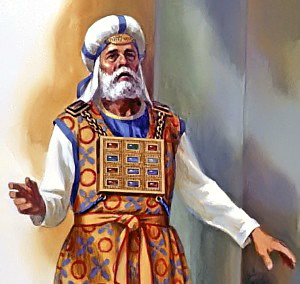
Our focus is not on priests or the priesthood as it is usually envisioned (whether Jewish or Catholic). Rather, I want to direct our thoughts to a concept not often promoted by the established clergy (regardless of religious persuasion): the priesthood of ALL believers! In this present dispensation of grace, every true believer is regarded by Yehovah as a priest engaged in priestly service. And yes, that includes women! There are no exclusions based on gender, race, nationality or social standing. If you are saved by grace through faith, if you are "in the Messiah Jesus," you are a priest in God's sight. You are a fully functioning member of His priesthood, and you are called to serve Him and others in that capacity. Isaiah prophesied about "the year of Yehovah's favor" (Isaiah 61:2) which would come upon the people of God (a prophecy with more than a single and/or immediate fulfillment, but one that would be applicable to both present and yet-to-come dispensations), saying, "You will be called priests of Yehovah, you will be named ministers of our God" (vs. 6a). Although this certainly had meaning and application for the ancient Jews, it also looked to the era of the new covenant. "You are a chosen people, a royal priesthood, a holy nation, a people belonging to God, that you may declare the praises of Him who called you out of darkness into His wonderful light" (1 Peter 2:9). "You, like living stones, are being built into a spiritual house to be a holy priesthood, offering spiritual sacrifices acceptable to God through Jesus the Messiah" (vs. 5). For the lord Jesus "has made us to be a kingdom and priests to serve His God and Father" (Revelation 1:6, NIV).

As for the all-inclusiveness of these called-ones in the new dispensation, the prophet Joel gave us a glimpse: "I will pour out My Spirit on all people. Your sons and daughters will prophesy, your old men will dream dreams, your young men will see visions. On my servants, both men and women, I will pour out My Spirit in those days" (Joel 2:28-29). Peter declares to the crowds on the day of Pentecost that this prophecy was being fulfilled in their presence, saying that what they were witnessing "is what was spoken by the prophet Joel" (Acts 2:16). "The time of the new order" (Hebrews 9:10b) had arrived; it was a time of great change. As Jesus declared to the Samaritan woman, "The time is coming - indeed it's here now - when true worshipers will worship the Father in spirit and in truth. The Father is looking for those who will worship Him that way" (John 4:23, NLT).

Yes, it is a new day; things have forever changed, and changed dramatically! In this new order we who are in the Messiah are ALL priests before our God, performing priestly service. The rigid religious restrictions and exclusions of the past are gone; the era of a new sanctuary and a new priesthood has arrived (Hebrews 9:1-10)! The way into the very presence of God by ALL believers, entering through the veil as priests serving before God under our great High Priest Jesus the Messiah, has been opened unto us (Hebrews 10:19f). We are indeed a chosen and blessed people; a royal priesthood; freed from bondage to oppressive law; living in the freedom of God's grace.

As the people of Israel made their escape from their centuries of bondage in the land of Egypt, they were led to Mount Sinai. It was here that Yehovah God entered into a gracious covenant with the Israelites. "You shall be My own possession among all the peoples, for all the earth is Mine; and you shall be to Me a kingdom of priests and a holy nation" (Exodus 19:5-6). Although the people were initially thrilled with this prospect, their history would be one of repeated detours from this "highway of holiness" laid out before them. By these deviations from God's will for them, the people of Israel would fail to rise to the regal reality to which their God had called them. Although there were a number of bright moments, spiritually speaking, in their long history as a nation, it would not be until the era of the new covenant that God's redeemed ones would truly become, in the way anticipated by Yehovah, "a kingdom of priests." In Revelation 5:9-10 we find the four living creatures and the 24 elders singing a new song, declaring of the Lamb of God, "Worthy are you to take the scroll, and to break its seals; for you were slain, and did purchase for God with your blood men from every tribe and tongue and people and nation. And you have made them to be a kingdom of priests to our God; and they will reign upon the earth." It would be a kingdom "not of this world" (John 18:36), Jesus told Pilate, but a spiritual kingdom in which the Spirit of God would dwell within his subjects: thus, while living in this world, we would nevertheless not be of this world.

In the new dispensation there would be no need for a literal physical structure (a temple) in which religious, ceremonial acts would be performed, for God would now dwell within the sanctuary of our hearts. There would be no further need for a priesthood (after the pattern of the Levitical priesthood who ministered in the Jewish temple), for every person who was in the Messiah Jesus would be a priest performing priestly duties. God's temple is now the church, and the sanctuary (the "naos") is our hearts. "Do you not know that you are a temple (literally: a "naos" = sanctuary) of God, and that the Spirit of God dwells in you?" (1 Corinthians 3:16, cf: 1 Corinthians 6:19). The "temple" of this new dispensation of grace is not a building made by human hands, but a spiritual edifice (the church) made up of living stones (i.e., individual believers). We are the household of God our Father, "having been built upon the foundation of the apostles and the prophets, the Messiah Jesus himself being the cornerstone, in whom the whole building, being fitted together, is growing into a holy temple (literally: "naos" = a sanctuary) in Yehovah; in whom you also are being built together into a dwelling of God in the Spirit" (Ephesians 2:19-22). "You also, as living stones, are being built up as a spiritual house for a holy priesthood, to offer up spiritual sacrifices acceptable to God through Jesus the Messiah" (1 Peter 2:5), for "you are a chosen race, a royal priesthood, a holy nation, a people for God's own possession, that you may proclaim the excellencies of Him who has called you out of darkness into His marvelous light" (vs. 9). Yes, our lord Jesus the Messiah "has made us a kingdom, priests to His God and Father" (Revelation 1:6). "What Israel was to be, the Messiah made us to be" [Dr. R.C.H. Lenski, The Interpretation of St. John's Revelation, p. 46].

No longer is Yehovha's priesthood limited to a specific people (the Jews), and a specific tribe (the Levites), and a specific gender (males only). The priesthood of God under His new covenant is open to all who are indwelt by His Spirit. Men and women, Jews and Gentiles, slave and free, rich and poor -- ALL may serve Him within this priesthood of all believers. "Thus, the called-out Assembly is an unlimited priesthood to offer upon the altar of the consecrated, dedicated heart of the believer spiritual sacrifices, not animal sacrifices as in the case of the Levitical priests, but the activities of the human spirit of man energized by the Holy Spirit" [Dr. Kenneth S. Wuest, Wuest's Word Studies from the Greek New Testament, vol. 2, p. 53]. This priesthood of all believers is "one of the basic premises of the New Covenant: He invites all of us to be members of His royal priesthood; all of us have been called to ministry; all of us have both the joy and the responsibility of serving the Messiah and each other" [Dr. Paul Cedar, The Communicator's Commentary: 1 & 2 Peter, p. 143]. He is King of a kingdom "that transcends all geographical borders or political differences" [ibid], one in which we reign with Him by virtue of being in Him, "seated with Him in the heavenly places" (Ephesians 2:6; cf: 2 Timothy 2:12). Further, we are a kingdom of priests, a priesthood that transcends both nationality and gender. We are truly, in every sense of the word, a universal called- out Assembly of our lord Jesus the Messiah: all are welcome; all may serve in whatever capacity God has called them and equipped them! "The distinction of priests and people, nearer and more remote from God, shall cease" [Drs. Jamieson, Fausset & Brown, Commentary Practical and Explanatory on the Whole Bible, p. 1528]. "All believers alike, and not merely ministers, are now the dwelling of God and priests unto God" [ibid, p. 1471]. "Each member of the Messiah shares in his eternal priesthood" [The Pulpit Commentary, vol. 22, p. 4]. "Natural descent and all other differences are obliterated" [Dr. R.C.H. Lenski, The Interpretation of the Epistles of St. Peter, p. 99].

"The whole body of Christians is in fact a priesthood. Everyone is engaged in offering acceptable sacrifice to God. The business is not entrusted to a particular class to be known as priests; there is not a particular portion to whom the name is to be especially given; but every Christian is in fact a priest, and is engaged in offering an acceptable sacrifice to God. ... The term 'priest' is applicable to all Christians alike" [Dr. Albert Barnes, Notes on the Bible, e-Sword]. "Collectively," writes Homer Hailey, "the redeemed are a kingdom; individually, they are priests" [Revelation: An Introduction and Commentary, p. 101]. Within this new covenant kingdom, brought into existence by the Messiah, we find some significant changes from the kingdom of the old covenant, but one of the most prominent, and to some: problematic, is the fact that ALL disciples are priests before God. Indeed, efforts have been made throughout the history of Christendom to exclude certain disciples from realizing this new reality. "This truth of the 'priesthood of all believers,' however, was rediscovered and stressed during the Reformation" [The Expositor's Bible Commentary, vol. 12, p. 230]. Offering up sacrifices unto the Lord God was no longer restricted to the Levites, nor even to male "priests" alone (as seen in some "high church" denominations). "Every Christian can offer up spiritual sacrifices" [Dr. B.W. Johnson, The People's New Testament with Explanatory Notes, p. 359]. "Under the law of Moses the priests constituted a special class empowered to officiate in worship; inasmuch as all Christians are authorized to engage in the worship of God, all Christians are priests, and thus together constitute a priesthood of believers. ... Such are a priesthood, because empowered to officiate in worship; and the priesthood is a 'royal' one because of its relationship to the King" [Guy N. Woods, A Commentary on the NT Epistles of Peter, p. 58, 63].

Burton Coffman, in his Commentary on Revelation, noted that "The Messiah has made us a kingdom, each member of which is a priest unto God. This is not some far-off thing that will happen in some so-called millennium; it is the status of things now in Christ's church" [p. 23]. The kingdom of our God and Father -- His forever Family; His blood-bought called-out Assembly universal -- is made up of believers who are also commissioned as priests to offer up sacrifices unto Him. And yes, this transcends race, culture, nationality and even gender! "Every stone - son and daughter - being a spiritual sacrificer or priest, all offer up praise and thanksgiving to God through Christ; and such sacrifices, being offered up in the name and through the merit of His Son, are all acceptable in His sight" [Adam Clarke, Clarke's Commentary, vol. 6, p. 851]. Where too many get "hung up" here is in their view that our priestly functions occur primarily within a church building in an official "worship service" during which we perform regulated "acts of worship." And, of course: No Women Allowed!! The phrase "worship service," however, NEVER appears in the Bible ...not even one time!! We have created a monster by taking a beautiful spiritual relationship with our Father and turning it into a rigid, regulated religion. By organizing and institutionalizing this relationship we have lost sight of the Father's universal spiritual Family, and all we are left with is a host of warring religious factions, sects and denominations. Frankly, it is shameful what has happened in Christendom over the centuries, which is why many of us are seeking to awaken our wayward brethren and bring about a much needed spiritual reformation and transformation.

God is little concerned with what happens within our buildings during a "worship service." Those times are for our own edification and encouragement, primarily. Where you and I truly serve as new covenant priests is in our daily lives as we offer up the sacrifice of Jesus-focused, grace-centered, love-motivated lives in service to others (to His glory). "I urge you therefore, brethren, by the mercies of God, to present your bodies a living and holy sacrifice, acceptable to God, which is your spiritual service of worship. And do not be conformed to this world, but be transformed by the renewing of your mind, that you may prove what the will of God is, that which is good and well-pleasing and perfect" (Romans 12:1-2). Did you notice that Paul spoke of our priestly "service of worship," NOT of our partisan "worship services"? We, as kingdom priests under the new covenant, no longer offer ceremonial and/or bloody sacrifices in a physical structure (temple), but rather spiritual sacrifices motivated by the Spirit indwelling God's people: the new "naos" (sanctuary) of God. We are not only the "temple/sanctuary" ... we are not only the "priesthood" ... we are also in a very special way the "sacrifice" being offered. "Present your bodies a living and holy sacrifice" (Romans 12:1). John Calvin (1509-1564) wrote, "Among spiritual sacrifices the first place belongs to the general oblation of ourselves, for never can we offer anything to God until we have offered ourselves (2 Corinthians 8:5) in sacrifice to Him. There follow afterwards prayers, giving of thanks, alms-deeds, and all exercises of piety." "Through Him then, let us continually offer up a sacrifice of praise to God, that is, the fruit of lips that give thanks to His name. And do not neglect doing good and sharing; for with such sacrifices God is pleased" (Hebrews 13:15-16). Our spiritual sacrifices are "not actual ceremonial observances," but are rather exemplified in our daily "pattern of social conduct" [Dr. J. Ramsey Michaels, Word Biblical Commentary, vol. 49, p. 101].

Little wonder, then, that James, the brother of our Lord Jesus, observed, "This is pure and undefiled religion in the sight of our God and Father: to visit orphans and widows in their distress, and to keep oneself unstained by the world" (James 1:27). This prompted John Wesley (1703-1791), in speaking of our duty as priests of God, to say, "You are to offer up your souls and bodies, with all your thoughts, words, and actions, as spiritual sacrifices to God" [Explanatory Notes on the Whole Bible, e-Sword]. Brethren, let's cease the endless sectarian strife over what we may or may not do in a church building during a "worship service." We have divided over such nonsense long enough. Let us rather focus on our "spiritual service of worship," and, as priests of God, let us offer up ourselves in daily godly living as ambassadors of His grace and representatives of His love. In this way we fulfill our commission as a kingdom of priests.

Written by Al Maxey and edited by Bruce Lyon

Tuesday, February 18, 2020

PRE-TRIB RAPTURE, FACT OR FICTION

The Pre-Tribulation Rapture Theory is a teaching that perverts the plain language of the text of the New Testament. Yet, some preachers today look on the doctrine as the heart and core of present Christian expectations in regard to prophetic truth for the near future! Many believe this false teaching is the principle hope of the Body of Christ for their redemption and safety during the Great Tribulation.

First understand that the word “Rapture” is not found in the King James translation. There is also no single word used by biblical authors to describe the prophetic factors that comprise the doctrine. Its formulation came about by means of inductive reasoning. Certain biblical passages concerning the Second Coming, and the role Christians will play in that event, were blended together inductively to establish the teaching.

It may come as a surprise but the doctrine of the Rapture is not mentioned in any Christian writings, of which we have knowledge, until after the year 1830 C.E. Whether the early writers were Greek or Latin, Armenian or Coptic, Syrian or Ethiopian, English or German, orthodox or heretic, no one mentioned it before 1830 (though a sentence in Pseudo-Dionysius in about 500 C.E. could be so interpreted). 

Those who feel the origin of the teaching is in the Bible might say that it ceased being taught for some unknown reason at the close of the apostolic age only to reappear in 1830. But if the doctrine were so clearly stated in Scripture, it seems incredible that no one should have referred to it before the 19th century.

Let's look at the origin of this teaching. Look at what happened in the year 1830 — two years before Irving’s dismissal from the Presbyterian Church. In that year a revival of the “gifts” began to be manifested among some people living in the lowlands of Scotland. They experienced what they called the outpouring of the Spirit. It was accompanied with speaking in “tongues” and other charismatic phenomena. Irving preached that these things must occur and now they were.

On one particular evening, the power of the Holy Spirit was said to have rested on a Miss Margaret Macdonald while she was ill at home. She was dangerously sick and thought she was dying. In spite of this (or perhaps because she is supposed to have come under the “power” of the spirit) for several successive hours she experienced manifestations of “mingled prophecy and vision.” She found her mind in an altered state and began to experience considerable visionary activity.

The message she received during this prophetic vision convinced her that Christ was going to appear in two stages at His Second Advent, and not a single occasion as most all people formerly believed. The spirit emanation revealed that Christ would first come in glory to those who look for Him and again later in a final stage when every eye would see Him. This visionary experience of Miss Macdonald represented the prime source of the modern Rapture doctrine as the historical evidence compiled by Mr. MacPherson reveals.

The studies of Mr. MacPherson show that her sickness during which she received her visions and revelations occurred sometime between February 1 and April 14, 1830. By late spring and early summer of 1830, her belief in the two phases of Christ’s coming was mentioned in praise and prayer meetings in several towns of western Scotland. In these meetings some people were speaking in “tongues” and other charismatic occurrences were in evidence. Modern “Pentecostalism” had its birth.

These extraordinary and strange events so attracted John Darby that he made a trip to the area to witness what was going on. Though he did not approve of the ecstatic episodes that he witnessed, it is nonetheless significant that Darby, after returning from Scotland, began to teach that Christ’s Advent would occur in two phases.

This teaching may cause many to fail and fall away when they are not "raptured" before the Great Tribulation period. this is exactly the type of false teaching that Satan has developed to cause Christians to lose faith and give up when they realize that indeed they are not going to resurrected before the Tribulation. It is a dangerous and misleading teaching that should be rejected and put on the garbage heap along with all the other false teaching that Satan has used to deceive believers! We are not to follow the traditions of men but we are indeed to live according to the revealed word of God.